
Skardu vs. Hunza: Which Valley Should You Choose?
April 28, 2026
8 min read
Limited time? An honest, side-by-side comparison of Skardu and Hunza to help you decide which valley deserves your days in Northern Pakistan.
Read MoreBlossom season in April, peak trekking in summer, golden autumn in October — a complete month-by-month guide to choosing the perfect time to visit Hunza and Skardu.
One of the most common questions we receive at Heritage Hike is: when is the best time to visit Hunza and Skardu? The answer depends entirely on what you are looking for — blossoming orchards, clear trekking skies, golden autumn foliage, or the stark beauty of a northern Pakistan winter. This guide breaks it all down month by month so you can plan the trip that is right for you.
Northern Pakistan has four distinct travel windows: Spring from March to May brings blossom season and mild temperatures. Summer from June to September is peak season with warm days and all high passes open. Autumn in October and November offers golden foliage and dramatically fewer crowds. Winter from December to February brings snow, cold, and limited access, but a hauntingly beautiful landscape for those willing to brave it.
March marks the beginning of the travel season. Snow begins to melt and the first apricot and almond blossoms appear in the lowest orchards toward the end of the month. Days are mild at lower elevations but cold at altitude. Best for early blossom photography, fewer crowds, and budget-friendly rates. Not ideal for high-altitude trekking or passes above 3,500m.
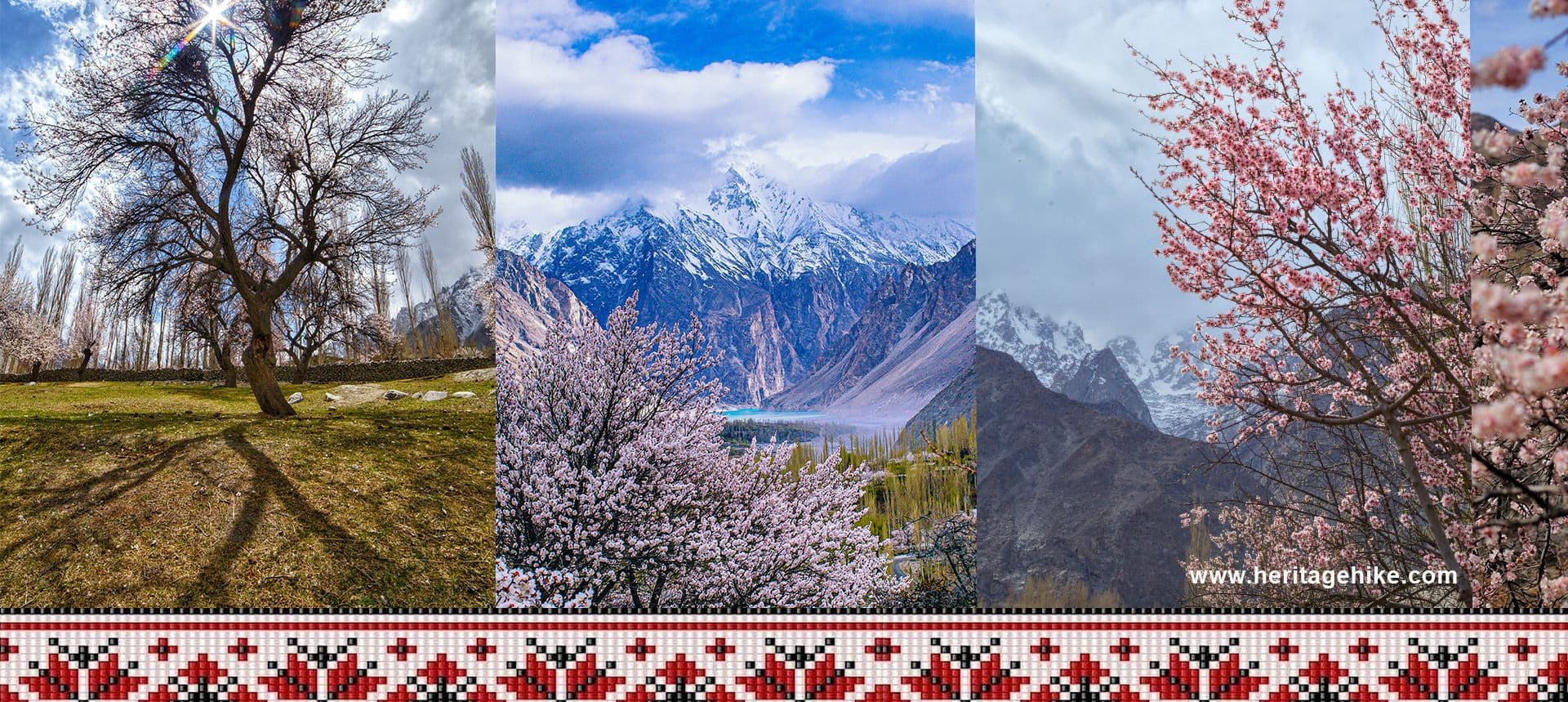
April is, for many, the most magical month in Hunza Valley. The full apricot and cherry blossom season typically peaks between the first and third weeks of April, covering the terraced hillsides of Karimabad, Altit, and Ganesh in clouds of white and pale pink. The combination of fresh blossoms, snow-capped peaks, and clear spring skies produces some of the most photographed scenery in Pakistan. Book accommodation months in advance for April — guesthouses in Karimabad fill up completely weeks before the blossom peak. Not ideal for high passes, Deosai (usually still closed), or the Baltoro Glacier.
May brings reliable warmth, longer days, and the opening of more mountain roads. The Karakoram Highway to Sost and Khunjerab typically reopens in May. Deosai National Park becomes accessible toward the end of the month. Trekking at moderate altitudes up to around 4,000m becomes comfortable. Best for Skardu exploration, Deosai opening, moderate trekking, and Shigar Valley. Not ideal for extreme high-altitude routes.
June is one of the finest months to visit. Days are long, weather is mostly stable, and the full range of northern Pakistan’s attractions is accessible. Khunjerab Pass is open, glacier walks are rewarding, and the Baltoro Glacier trekking season begins. Temperatures in Hunza and Skardu are warm and pleasant, typically 25 to 32°C during the day. Best for all-round touring, Khunjerab Pass, glacier walks, and the start of the Baltoro season.
July and August are the busiest months and for good reason. Every attraction in northern Pakistan is fully accessible. Deosai is carpeted with wildflowers. The K2 Base Camp trek is in full swing. Hunza’s terraces are green and lush. Be aware that July and August bring the heaviest snowmelt, which can occasionally trigger road blockages — build flexibility into your itinerary. Not ideal for travellers who dislike crowds or peak pricing.
September is arguably the single best month to visit northern Pakistan, combining full accessibility with noticeably fewer crowds than July and August. Temperatures ease from the midsummer heat, skies are crisp and clear, and the landscape retains its summer green while beginning to show the first hints of autumn gold. Accommodation prices start to ease and roads remain fully open. For most travellers, September is the sweet spot.
October transforms northern Pakistan into a landscape of extraordinary colour. The terraced orchards of Hunza turn gold, orange, and deep red. The poplar trees lining the roads of Skardu and Shigar Valley form golden corridors that are among the most beautiful sights in the country. Tourist numbers drop sharply and the mountains feel personal again. Best for autumn foliage photography, cultural travel, and uncrowded sightseeing. Not ideal for high-altitude trekking as passes may receive early snow; Deosai usually closes mid-October.
November is a transitional month — atmospheric for solitude-seekers but with limited services as guesthouses close for the season. December through February is cold, stark, and hauntingly beautiful. Hunza and Skardu receive significant snowfall transforming the valleys into a monochrome world of white mountains and frozen streams. Heritage Hike offers winter cultural tours for those who want to experience this raw, uncrowded side of northern Pakistan. Not ideal for trekking, first-time visitors, or high-altitude access.
For first-time visitors, we recommend April for the blossom experience or June to September for trekking and full access. For photographers, April and October stand apart. For those who want the mountains largely to themselves, September and early October offer the best combination of accessibility, beauty, and quietude. Whatever month you choose, northern Pakistan will exceed your expectations. Get in touch with Heritage Hike and we will help you design an itinerary matched precisely to your travel window.
You might also enjoy these Destination Guide stories
Limited time? An honest, side-by-side comparison of Skardu and Hunza to help you decide which valley deserves your days in Northern Pakistan.
Read MoreLimited time? Here's an honest comparison of Skardu and Hunza to help you decide which valley deserves your days in Northern Pakistan.
Read MoreGet the latest travel tips and adventure stories delivered to your inbox