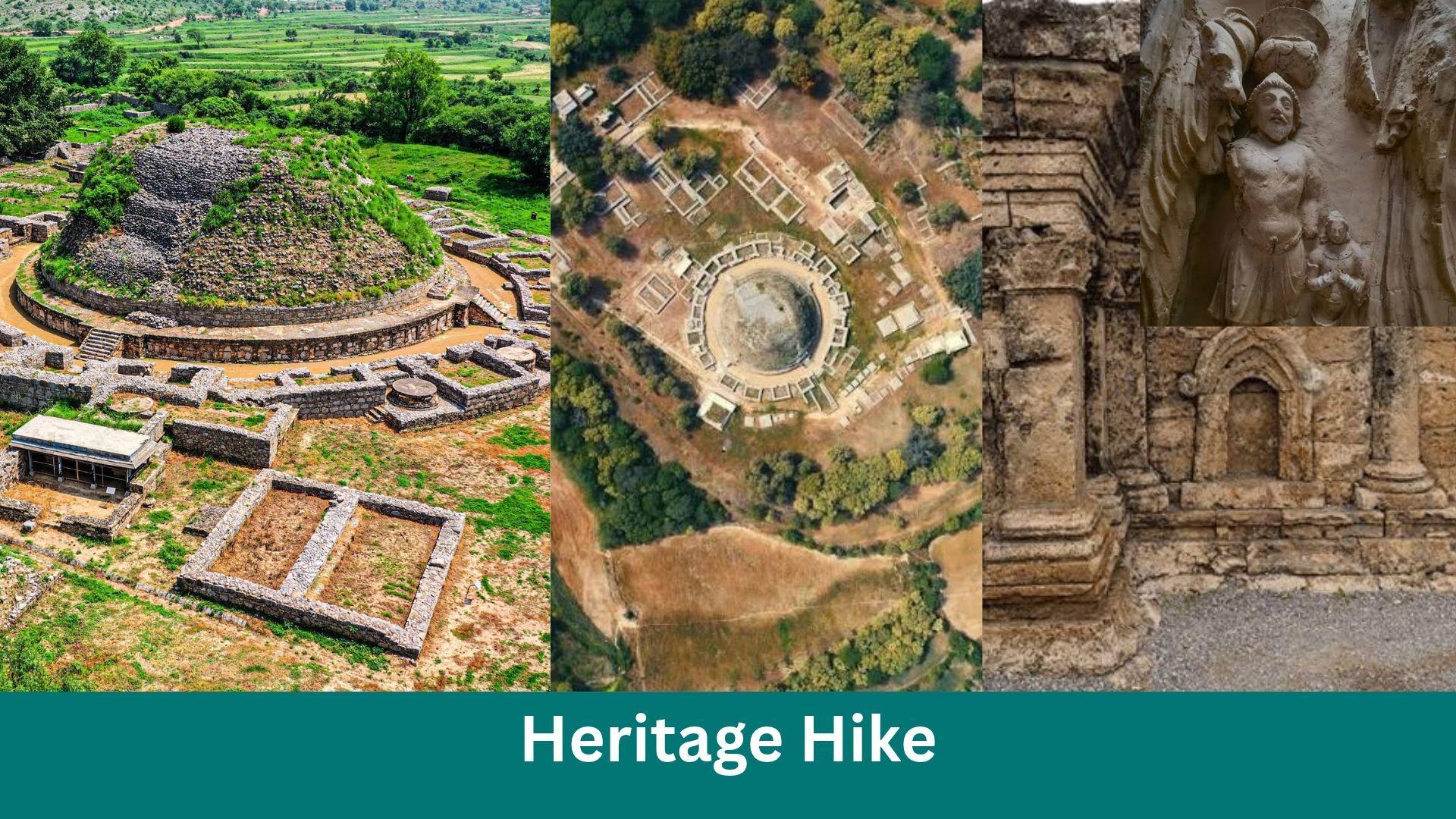
Two thousand years ago, the land that is now northern Pakistan was one of the great centres of the Buddhist world. The ancient region of Gandhara, around Peshawar, Taxila and the Swat Valley, produced some of the earliest images of the Buddha in human form, blending Indian, Greek and Persian artistic traditions. Pilgrims came from as far as China to visit its monasteries. Further north, Gilgit and Baltistan carried the faith along the mountain trade routes for centuries.
Today Pakistan has very few Buddhists, but the stupas, monasteries and rock carvings remain, and visitors from Korea, Japan, Thailand, Sri Lanka and beyond come to see them. Here is a trail through the best of them.
Start Near Islamabad: Taxila, Bhamala and Manikyala
Taxila, a UNESCO World Heritage Site an hour from Islamabad, is the natural starting point. Its museum holds one of the world's finest collections of Gandhara sculpture, and around the valley are monasteries such as Dharmarajika and Jaulian, whose monks' cells and carved stucco still survive.
Nearby, Bhamala, above the Haro River close to Khanpur Dam, has a rare cross-shaped stupa and the remains of a large reclining Buddha, unveiled in 2017. South-east of Rawalpindi, the great domed Manikyala Stupa is linked in tradition to the Jataka story of Prince Mahasattva, who gave his body to feed a starving tigress and her cubs.
Mardan: Takht-i-Bahi
Heading towards Swat, stop at Takht-i-Bahi near Mardan. This hilltop monastery, founded in the 1st century CE and used until about the 7th century, is the best-preserved Buddhist monastery in the region and a UNESCO World Heritage Site. The climb takes about 20 minutes and rewards you with courts of stupas, rows of meditation cells and wide views over the plain.
Swat: The Land of Uddiyana
In ancient times the Swat Valley was known as Uddiyana, and it is also revered in Tibetan Buddhism as the homeland of Padmasambhava. It is packed with Buddhist remains. Close to the motorway at Barikot, the Amluk-Dara stupa stands beneath the sacred peak of Mount Ilam. Near Mingora, Butkara I is one of the oldest sacred areas in the valley, with a stupa that dates back to around the 3rd century BCE and more than 200 smaller stupas around it.
North of Mingora, the Jahanabad Buddha, a 7th-century figure carved into a cliff, is the largest of Swat's hundreds of rock carvings. Militants damaged its face in 2007, and Italian archaeologists completed its restoration in 2016. It is now a powerful symbol of the valley's recovery. Don't miss the Swat Museum in Saidu Sharif, which displays sculptures from many of these sites.
Into the Mountains: Gilgit and Skardu
Buddhism flourished in the high valleys too. About 10 km west of Gilgit, the Kargah Buddha, a large standing figure carved into a cliff around the 7th century, overlooks Kargah Nala. The area is also linked to the discovery of the Gilgit Manuscripts, among the oldest surviving Buddhist manuscripts anywhere.
In Baltistan, the Manthal Buddha Rock on the edge of Skardu is a granite boulder carved around the 8th century with a central Buddha surrounded by smaller figures. It makes a perfect stop on the way to Satpara Lake or Deosai.
Planning Your Trip
The Gandhara sites around Islamabad, Mardan and Swat are best from October to April, or in spring and autumn for Swat. The mountain sites in Gilgit and Skardu are best from April to October. A combined trip works well in spring or autumn: start with the lowland sites, then fly or drive north.
Allow around a week for Taxila, Mardan and Swat, and add four to five days to include Gilgit and Skardu. Check current travel advice for Swat and Khyber Pakhtunkhwa before you go, and hire local guides, as many sites have little signage.
Respect matters here. Many sites sit in or near villages, and some are still places of devotion for visiting pilgrims. Don't climb on stupas or carvings, and always ask before photographing local people.
Heritage Hike can plan a private Buddhist heritage tour with a vehicle and driver, guides who know the archaeology and comfortable stays along the route.